Cochise · Graham · Greenlee · Gila County, AZ
Serving Cochise, Graham, Greenlee & Gila County
Insured · Local Owned · License #10411
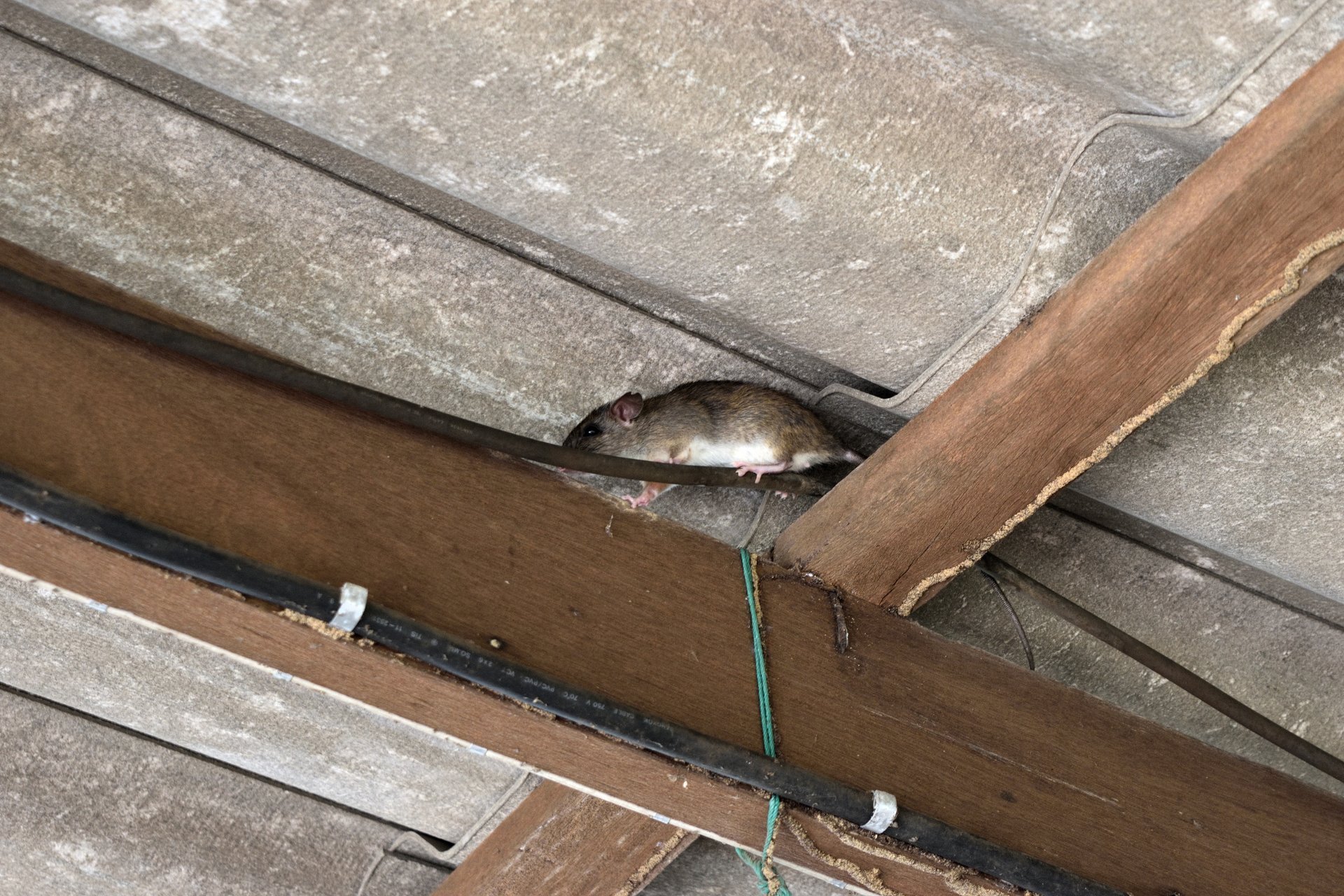
Rats and roof rats, droppings, gnawed wiring and scratching in the attic. We remove what's there, seal the entry points, and address what drew them in — so the problem doesn't simply come back.
Insured · Local Owned · License #10411
Rodents don't live inside a building because it's warm — they live there because it's connected to the outside through something the size of a quarter. A gap at a utility penetration, a gap under a garage door, a missing vent screen, or the gap between a roof and a fascia board is all it takes. Remove the rodents but leave the opening, and the cycle simply repeats.
That's why effective rodent work runs in order: locate the activity, remove what's there, seal the openings, then deal with what drew them in the first place. Roof rats in particular travel along power lines, tree limbs and rooflines, so high entry points matter as much as ground-level ones — and those are the ones most people never think to check.
There's also a health reason not to leave it alone. Rodent droppings and urine contaminate stored food and surfaces, and rodents chew wiring, insulation and plumbing — damage that's often discovered only after it's caused a problem.
Hearing something in the walls or attic? Call or text and describe the noise — it usually tells us a lot.
Explore More
Family-focused treatments that protect your home and everyone in it.
Programs for restaurants, offices and warehouses that hold up to inspection.
Detect and eliminate destructive termites before damage becomes expensive.
Reclaim your outdoor spaces from mosquitoes all season long.
Fast, thorough treatment for kitchens, bathrooms and utility areas.
Call or text Teds Services today and get a free, no-obligation quote for rodent control.