
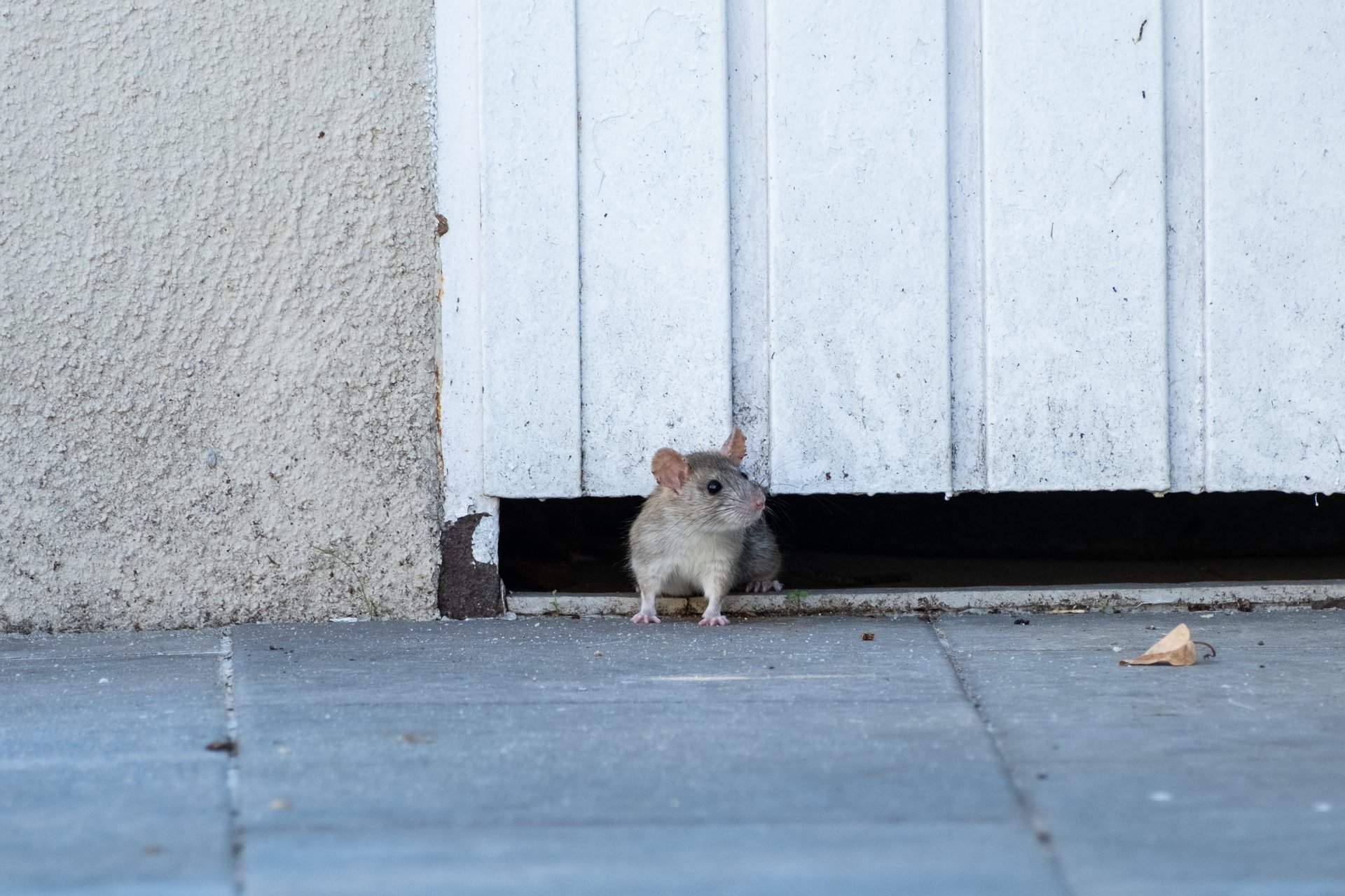
Every fall, we get the same calls: scratching in the attic, droppings under the kitchen sink, a bag of dog food chewed open in the garage. Rodents don't wait for winter to arrive — they start scouting for warm shelter well before the first cold snap. Getting ahead of them is a matter of timing.
Why Fall and Winter Drive Rodents Indoors
Rodents can breed year-round, but their activity peaks as temperatures drop. Cold weather eliminates their outdoor food sources and makes nesting sites harder to maintain. Your home, with its consistent warmth, accessible food and sheltered gaps, becomes the obvious choice.
Mice and rats are also incredibly capable of getting in. A mouse can squeeze through a gap the width of a pencil. Rats are larger, but they're strong enough to chew through wood, plastic and even soft metals to widen an opening.
Rule of thumb: If you can fit a pencil into a gap, a young mouse can use it as an entrance. Seal anything larger than a quarter inch.
The Entry Points They Actually Use
Rodents follow utility lines and structural edges, which is why the same entry points get reused generation after generation. Walk your home's exterior and check:
- Where pipes and wires enter — gaps around utility penetrations are among the most common access points.
- Door sweeps and thresholds — garage doors and exterior doors with worn weather stripping.
- Roof lines and eaves — especially where rooflines intersect or where vents are unscreened.
- Foundation vents and weep holes — openings that should be screened but often aren't.
- Attic and crawl space access doors — rarely sealed tightly, and almost always where the scratching sound comes from.
Exclusion: Seal It Shut
Exclusion is the single most effective long-term rodent strategy, because it addresses the root of the problem instead of the symptom. Use copper mesh or steel wool for gaps — rodents can't chew through either. Seal around utility penetrations with appropriate sealant. Install door sweeps on exterior doors, and keep garage doors closed whenever possible.
If rodents are already inside, seal after you've removed them — otherwise you'll trap animals in the walls, which creates odor and secondary pest problems.
Reduce What Attracts Them
Even a perfectly sealed home is more attractive if there's food and shelter nearby. Keep your exterior perimeter clear of debris and stacked materials. Store pet food and birdseed in sealed containers — birdseed and dog food are two of the most common rodent food sources we find. Trim vegetation back from the structure so it doesn't create a bridge to the roof. And fix leaks and drainage problems, since rodents need water too.
Health Risks Worth Taking Seriously
Rodents aren't just a nuisance. Their droppings and urine can contaminate food surfaces, and they're associated with the spread of serious diseases. Their chewing also damages wiring — which is a genuine fire risk. And because they chew constantly to keep their teeth worn down, structural damage accumulates fast.
When to Bring in a Professional
If you're hearing scratching, finding droppings, or seeing rub marks along walls, you have an active rodent problem. A professional assessment identifies the species, locates the entry points and harborage areas, and combines trapping with exclusion so the problem doesn't simply return next season.
Teds Services handles rodent control — including roof rats, which are especially common in our area — across Cochise, Graham, Greenlee and Gila County. Call or text and we'll take a look.