
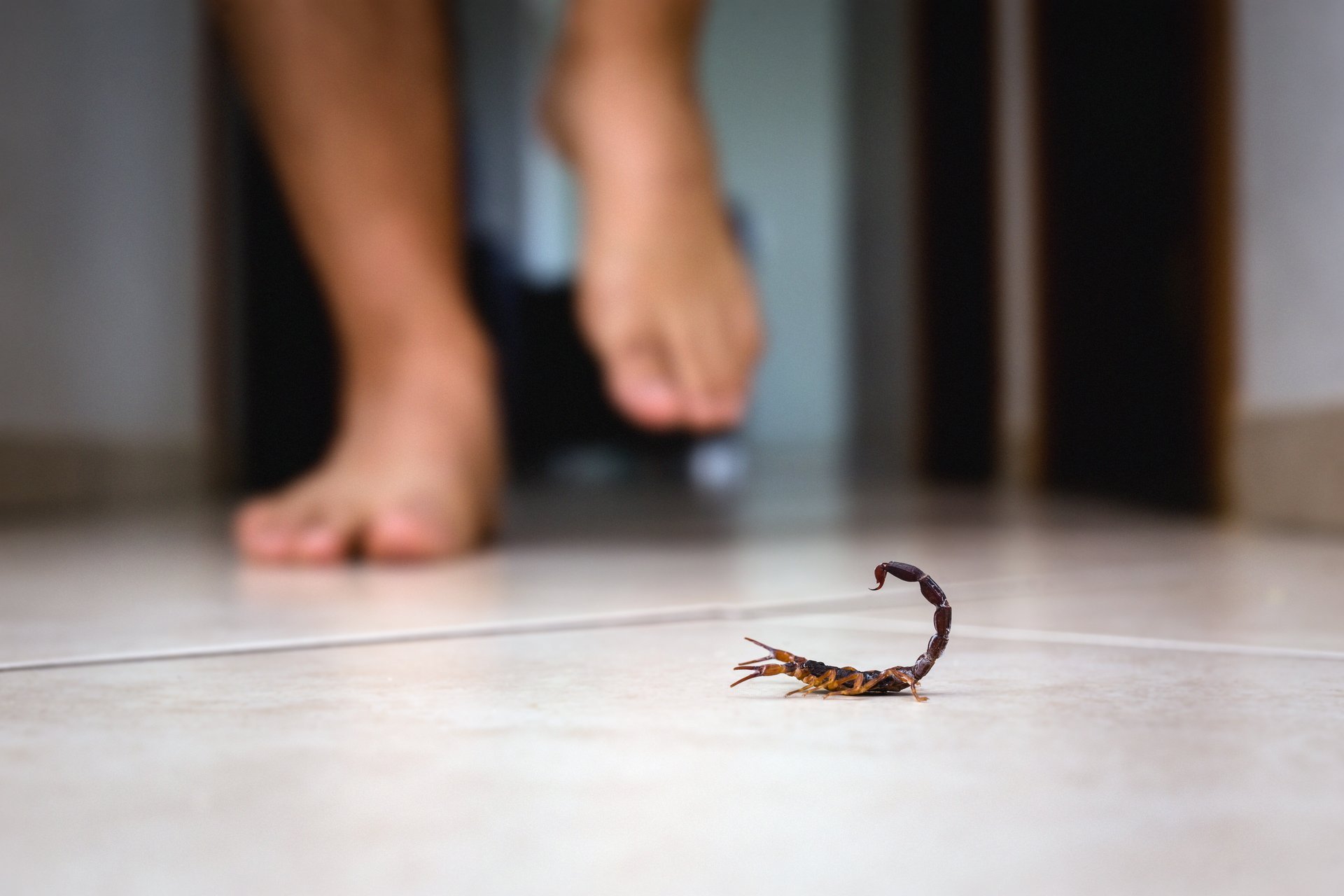
If you live in southern Arizona, scorpions aren't a matter of if — they're a matter of when. Our desert environment is their native habitat, and most homes in Cochise, Graham, Greenlee and Gila County sit directly in their territory. The good news: scorpions follow predictable patterns, and once you know them, they're far easier to manage.
When Scorpions Are Most Active
Scorpions are cold-blooded, which means their behavior is tied directly to temperature. In our area, they're most active from late spring through early fall, when overnight temperatures stay warm. During the hottest part of the day they retreat into shade and cracks, emerging after dark to hunt.
That nocturnal habit is exactly why so many homeowners get stung in unexpected places — picking up a piece of firewood, stepping into a shoe, or reaching behind something stored near the garage wall.
Safety first: Shake out shoes, gloves and clothing before putting them on, and never reach into cracks or gaps without looking first.
Where They Hide Around Your Home
Scorpions want cool, dark, undisturbed spaces close to their food source. In and around Arizona homes, that usually means:
- Exterior walls and block fences — weep holes and cracks are prime entry points.
- Landscaping rock and gravel — decorative rock stays warm and offers endless crevices.
- Attics, garages and crawl spaces — quiet, dark, and rarely disturbed.
- Door thresholds and window frames — the small gaps you'd never notice let them straight in.
Why They Come Inside
Scorpions don't invade your home out of aggression — they follow their food. If you have crickets, cockroaches, spiders or other small insects around your foundation, you have a scorpion food supply. Reduce the prey and you reduce the predator.
Extreme weather also pushes them indoors. When the desert heat peak hits or a heavy monsoon storm rolls through, scorpions look for stable conditions — and your home qualifies.
Prevention That Actually Works
A scorpion prevention strategy has two parts: exclusion and reduction.
Exclusion means sealing the gaps scorpions exploit — weather stripping on doors, screens on vents, caulk or sealant on foundation cracks, and mesh over weep holes. This is often the single highest-impact change a homeowner can make.
Reduction means making your property less inviting. Keep rock and gravel pulled back from the foundation, remove leaf litter and debris, store firewood off the ground and away from the house, and maintain a regular perimeter treatment that controls the insects scorpions feed on.
When to Call a Professional
If you're finding scorpions regularly — especially inside the home, or if you have young children or pets — a perimeter treatment program is worth it. Over-the-counter sprays typically only kill what they touch. A professional treatment targets the harborage areas and the food supply together, which is what actually reduces the population over time.
Teds Services provides scorpion-focused treatments across Cochise, Graham, Greenlee and Gila County. We'll inspect your property, identify the entry points and harborage zones, and build a plan that fits your home. Free quotes, no pressure — just call or text.